
This blog post is written by therapist and Certified Eating Disorder Specialist (CEDS), Sarah Nonnenmacher, LPC.
The False Peak & The Long Haul
Anyone who has taken the time to think about eating disorder recovery, for themselves or a loved one, may have been wondering some of the following thoughts: how long will this take? When will I make progress? How do I know what progress looks like? When will things start to feel normal again? And so on.
PS. Clearly no metaphor can perfectly capture each individual’s recovery journey. But hiking can be a helpful way to imagine the journey of Eating Disorder (ED) recovery.
About the writer
Sarah Nonnenmacher loves to hike and be outdoors. She has helped individuals in eating disorder recovery at many different stages in their treatment/recovery journey.
Sarah works at Bamboo Nutrition as an outpatient eating disorder therapist and helps those of all ages navigate this difficult journey, and celebrating the “views” and successes along the way!
“Recovering from an eating disorder can often be compared to a long, arduous up-hill climb, with full recovery at the peak. ”
The False Peak & The Long Haul
I’ve had the good fortune of being able to participate in not just one, but a handful of backpacking expeditions; it’s historically been one of my favorite hobbies.

Sarah Nonnenmacher on one of her personal hikes
Hiking has long been an apt metaphor for the recovery journey. Recovering from an eating disorder can often be compared to a long, arduous up-hill climb, with full recovery at the peak.
It takes perseverance and faith that the destination is worth the travail.
You need tools to help you, and you need a team of experts to act as guides along the way.
As I’ve had the privilege to come alongside people on their recovery journeys, I’ve found two places on the map that require special attention.
The False Peak
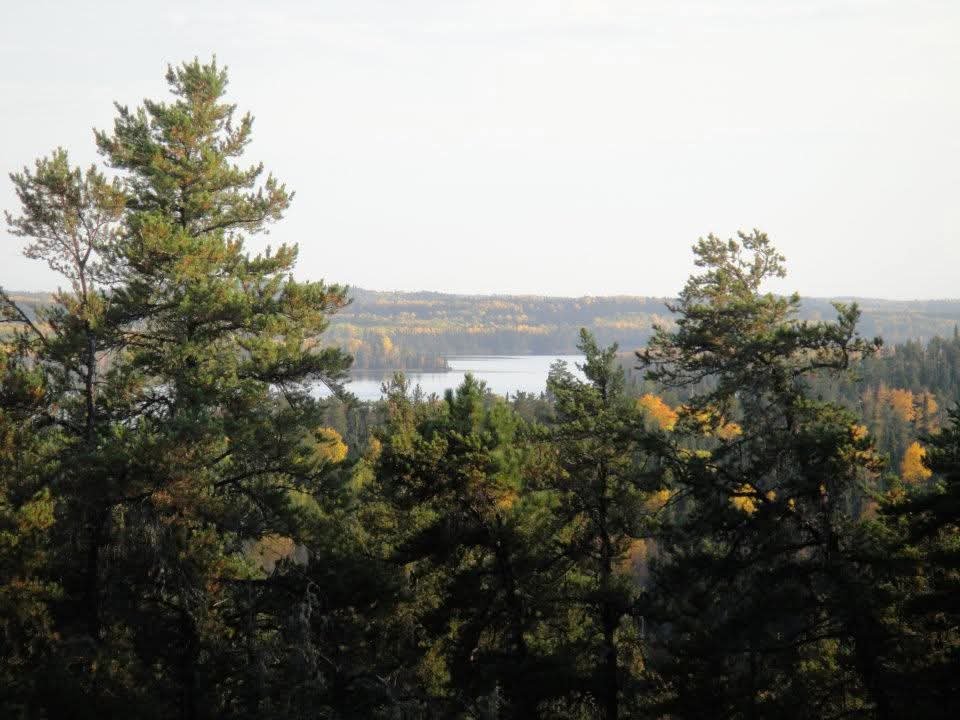
The False Peak is when we are happily but precariously camping in pseudo-recovery.
My relationship with food is not as bad as it was, but it’s also not great.
Because it’s not “SO” bad, it becomes easy to ignore all the many ways the eating disorder still has control and is making life much more stressful than it has to be.
The view from here is nice enough, and I”m not so far from the start that I can’t turn around if I want to. Maybe I’ll just hang here and set up camp…
“It’s at the False Peak that our deep inner motivations and fears are revealed. ”
“The problem with the false peak is that someone may claim to be “recovered,” but still be very sick. ”
It’s at the False Peak that our deep inner motivations and fears are revealed.
For example…
I may have liked the idea of food freedom, but I’m just not ready to give up the sense of control my eating disorder gives me.
I’ve started talking as if I believe positive things about myself, but I’m not truly letting myself believe those things, and thus I try to hold onto body image as a means to assure myself I’m “ok.”
I want to have one foot in both worlds, trying to act like my eating disorder is a thing of the past, without experiencing the vulnerability and renewal of true recovery.
The problem with the false peak is that someone may claim to be “recovered,” but still be very sick.
As long as your eating disorder is active, you remain in increased risk for physical health risks, depression, and suicide.
The Cliff of Relapse may only be a few misplaced steps away. This is also an exhausting place to be; you expend an enormous amount of energy trying to keep the eating disorder quiet, while not allowing yourself to slip backwards.
The good news is, even if you’ve been camping out here for a while, it’s not too late to pick up and move forward in your recovery.
How to do this…
Ask your trusted friends for their honest feedback.
Explore with your treatment team what might be holding you back. You deserve more than pseudo-recovery. Don’t give up on yourself just yet.
The Long haul
Step by step by step, we plod along with our heavy packs.
“That last climb before the peak is the most mentally challenging, simply because the only thing I can do is just keep going. ”
Our legs are numb by mid-morning following our pre-dawn breaking of camp.
The true peak is ahead of us, and looks close, but hour by hour goes by and it doesn’t seem to be getting closer.
The view above the treeline is unchanging, and all we can do is watch our feet take step after step as we edge our way up the steepest part of the mountain.
The excitement of the expedition has dwindled and has given way to boredom.
That last climb before the peak is the most mentally challenging, simply because the only thing I can do is just keep going.

“This is the Long Haul, where the main ingredients are perseverance, support, and time. ”
In Eating Disorder recovery, the Long Haul is when someone turns a real corner in their motivation and outlook, and they are still waiting for the ED voice to finally quiet down and leave them alone.
The decision to recover fully has been made, the meal plan is being followed and coping skills are actively and consciously being used on a regular basis.
As a therapist, I can usually tell when someone reaches the Long Haul because their outlook and motivation has changed, and it is here that I’m often asked, “How long is this going to take? When will I finally be free of these thoughts?”
My advice is this: keep going.
Day by day by day, new habits are being formed.
Hour by hour, new neuropathways are being solidified.
Moment by moment, new coping skills are practiced and mastered.
This is the Long Haul, where the main ingredients are perseverance, support, and time.
One day you realize that you haven’t heard that ED voice in quite a while.
You didn’t notice its absence, because you were so engaged in living your life.
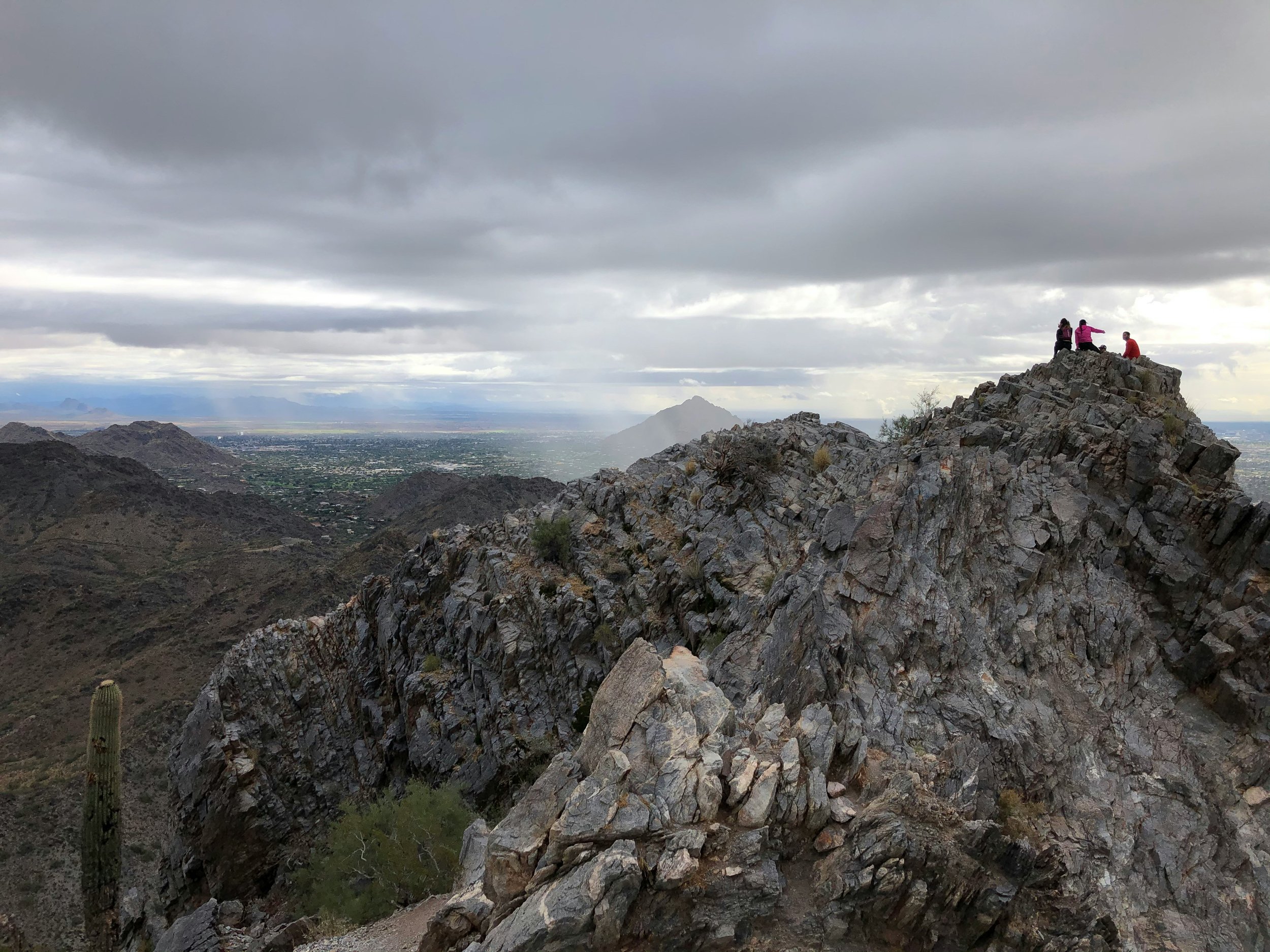
You’ve made it to Active Recovery. Enjoy the view, there’s nothing like it.
PS. Clearly no metaphor can perfectly capture each individual’s recovery journey. Some people have the fortune of being able to clearly say, “Yes, I’m recovered. My eating disorder is a thing of the past.” But this isn’t everyone’s journey, and that’s okay. Many others relate to the language of being “In recovery” all their lives, actively working to maintain their progress, watching for pitfalls, and navigating potential triggers to avoid relapse. Both of these experiences are “the Peak” of Active Recovery. Both are a tremendous accomplishment, and both are worth the journey.
If you’re someone who has gotten to the false peak and stopped there, or in need of a team of guides to help you maintain this difficult journey and get you to the end, we have professionals who would love to work with you!
Bamboo Nutrition has dietitians and therapists, both trained in eating disorder treatment, and ready to be on your team.