This post was written by: Isabelle Bouchard, MS, RD, LD
Breastfeeding vs. Formula
As a mother and a dietitian, I have a humble perspective on this topic. The first thing I want to ask you (the reader) is, Are you in a situation where you can choose, or are you anticipating not being able to breastfeed and formula is your only option?
If the answer is the latter, if you really don’t have the option to breastfeed and formula is the only option. Then please don’t feel guilty for having to learn about formulas and provide this as your baby’s form of nutrition! Some mom’s don’t have the choice and there are many many great formula options out there.
If you’re unsure where to look to learn more about formula options, I would start with consulting a dietitian at your hospital that you may have delivered at, or one nearby. Lactation Consultants and Pediatricians may also be valuable in helping you navigate all these different options.
WIC also provides a formula calculator on their website that is really helpful!
If breastfeeding is not an option, but donor milk is, then absolutely it is great that you’re researching whether breastmilk or formula is the best for you and your baby.
If you can breastfeed, you’re just unsure if you want to, I’m also glad you’re here reading this!
Let’s Start With Donor Milk
I first want to explain donor milk, to help answer these questions first or provide the breastfeeding mom’s with another option to explore.
Donor milk can come from friends, if you have trusted friends who have offered. Ideally, donor milk comes from a milk bank where donors have been vetted and all donor milk has been mixed and pasteurized.
Why is the milk mixed? Even though all donors are screened and must go through a strict collection process, mixing the milk further minimizes any risk where a baby could react to something within the milk and helps ensure an even distribution of nutritional components.
Why pasteurize it? Pasteurization is solely the act of heating the milk to eliminate any harmful bacteria, while the nutrition remains intact.
Donor milk can be expensive, thus many mothers turn away from this option. Some states insurances have different restrictions or reasons that would qualify someone to receive donor milk or not. It is definitely worth looking into!
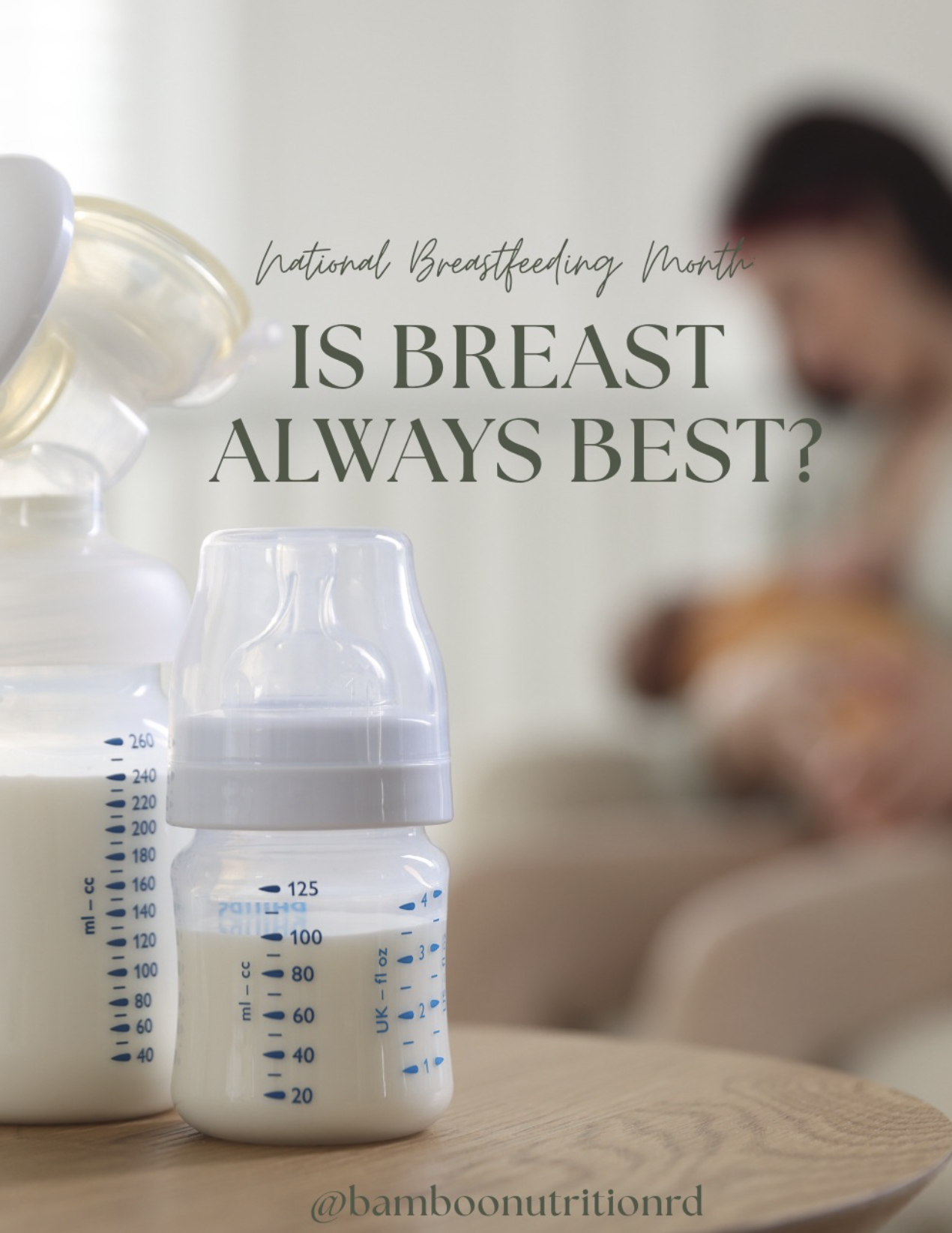
Is Breastfeeding Best?
If you have the ability to breastfeed, I would recommend it. Yes, it is best. There is no other more natural way to feed your child. It is the best, custom nutrition for your child, it is also the most cost-effective method. Yes, it is a sacrifice and moms still need to be responsible (monitor alcohol intake, caffeine intake, substance use), and in some situations, mom’s intake needs to change if baby has allergies. If a mother cannot provide safe milk for their baby, then I would strongly recommend formula or donor milk.
If you’ve been breastfeeding, but your supply is low or dries up sooner than expected, talk with a dietitian about when you could transition to cows milk, or what sort of supplement you could do to bridge the gap until your child is ready for cows milk.
Facts vs. Myths about Breastfeeding
Formula is equal to breastmilk
Myth.
Breastmilk is uniquely made for the baby and changes as they grow. It provides nutrients, antibodies, hormones and other protective components that support the baby’s health and development. Formula can provide important nutrition too, but it does not contain all the living, protective components found in breastmilk.
Don’t breastfeed if you are sick- you can pass it to your baby.
Myth.
In most cases, you can, and should, continue to breastfeed when you are sick. Your body produces antibodies to fight the illness, and those antibodies pass through your breastmilk! You are essentially helping build your child’s immunity! If you’re unsure whether it is safe to breastfeed with a specific illness or medication, check with your healthcare provider.
Babies who have been breastfed are clingy.
Myth.
Every baby has their own personality and temperament, regardless of how they are fed. Breastfeeding provides nutrition and opportunities for closeness that can support healthy bonding and a trusting relationship between mom and baby.
Babies don’t need breastmilk after they start eating solid food.
Myth.
Starting solids doesn’t mean your baby is ready to stop breastfeeding. From around 4-6 months, solid foods compliment breastmilk and help a child learn and develop good oral and motor skills, but it is important to maintain breastmilk intake as this is the baby’s primary source of nutrition. As your baby grows, breastmilk remains an important part of their diet while solid foods gradually become a larger part of their meals/intake.
If you have questions about feeding your baby solids (allergies, intolerances, baby-led weaning, etc) our dietitians can help!
if you can’t breastfeed your baby, you’re “not a good parent.”
Obviously, Myth.
How you feed your baby does not determine the kind of parent you are! Breastfeeding can be a meaningful goal, but it isn’t always possible or the right choice for every family. What matters most is that your baby is fed, cared for, and loved and that you have the support you need along the way.
Breastfeeding is a solo journey.
Myth.
You don’t have to do it alone. Lactation professionals, healthcare providers, and other support systems can help with questions, challenges, and both mom and baby’s health.
At Bamboo Nutrition, our team offers compassionate nutritional and mental health support for moms and parents. Click on the button below if you’re interested in either nutrition, therapy, or both services!